Fuel Tanker Truck vs Fuel Tank Semi-Trailer: Which Solution Lowers Your Cost per Litre?
The Two Configurations at a Glance
| Aspect | Fuel Tanker Truck (Rigid) | Fuel Tank Semi-Trailer |
|---|---|---|
| Configuration | Single self-propelled unit — chassis, cab, and tank in one | Tank trailer pulled by a separate tractor head |
| Drive layout | 4×2 (e.g. Dongfeng, 18-ton load, 190hp) to 8×4 | 2 / 3 / 4 axles, coupled to a 6×4 tractor |
| Capacity (reference) | Moderate — one vehicle, one tank | 15,000L – 50,000L depending on axle count |
| Tank material | Carbon steel or aluminium alloy | Q235B carbon steel (5–6 mm) or 5083 aluminium |
| Compartments | Multi-compartment available | 1 to 6 independent compartments |
| Equipment | Often fitted with pump, hose reel (e.g. 15 m), and nozzle for dispensing | Discharge valves (3" or 4" API) — discharge, not dispensing |
| Capital outlay | One vehicle | Two units (trailer plus tractor) |
Where the Rigid Tanker Truck Wins
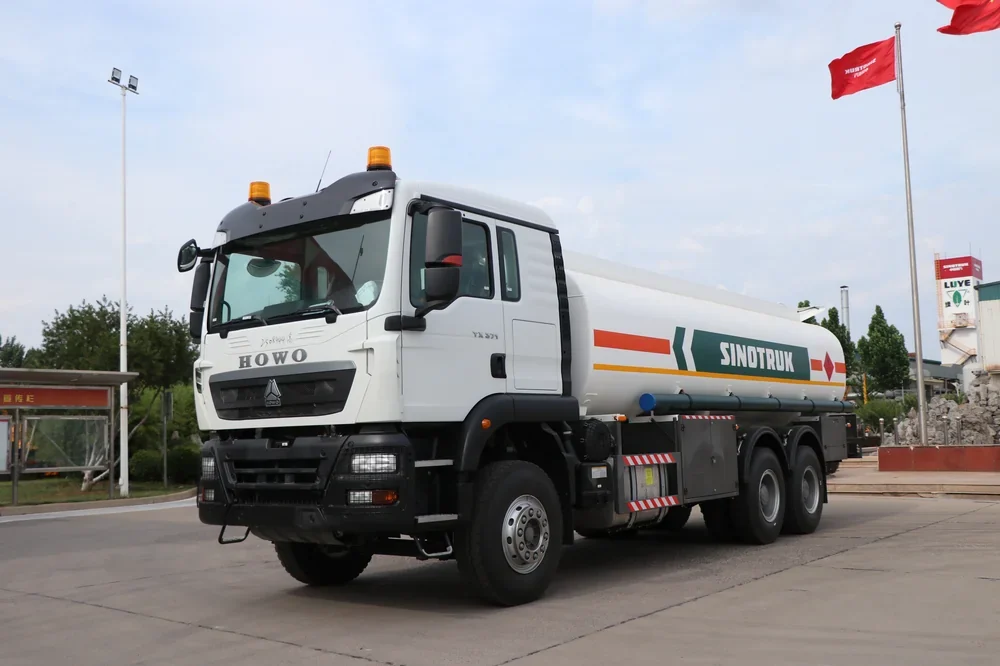
Mobile, direct refuelling. This is the defining advantage. Tanker trucks are commonly fitted with a refuelling pump, a hose reel around 15 metres, and a dispensing nozzle — turning the vehicle into a mobile filling station. It can drive to a truck, an excavator, or a generator and refuel it on the spot. This is decisive for mining operations refuelling equipment at the working face, construction sites provisioning scattered machinery, and any location without fixed refuelling infrastructure. A semi-trailer, which discharges through bottom valves at a fixed point, cannot do this.
Lower entry cost and simpler operation. One purchase, one registration, one driver. A semi-trailer requires a tractor head as well — a significantly higher outlay — plus a driver qualified for a combination. For a small operator or someone entering the business, the rigid truck is the lower-barrier option.
Manoeuvrability. A single-unit truck is shorter and easier to handle than a tractor-trailer. At city filling stations, in crowded depots, and on site roads, this means faster deliveries and fewer inaccessible routes.
Where the Semi-Trailer Wins
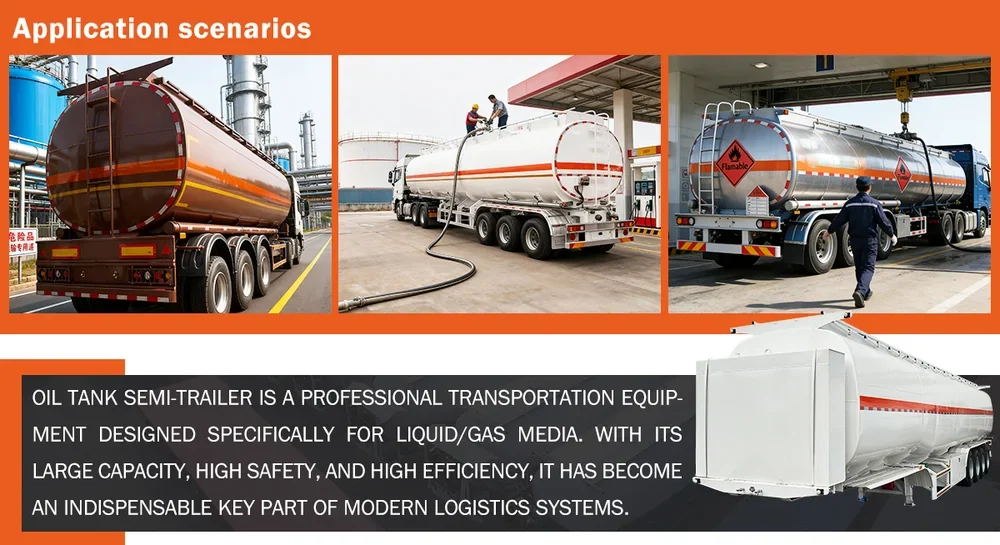
Higher payload per trip. Tank semi-trailers reach up to 50,000 litres in 3-axle and 4-axle form. A rigid tanker truck is limited by its own chassis and axle layout — the reference Dongfeng 4×2, for example, is rated at an 18-ton load. For long-distance, high-volume delivery, moving more litres per trip directly cuts cost per litre: fewer trips, fewer driver hours, less fuel burned on the delivery itself.
Fleet flexibility. Detach the trailer and the tractor can pull something else — a container chassis, a flatbed, or a second tank. An operator with a mixed business can buy one tractor and several trailers and switch cargo types without buying additional complete vehicles. A rigid tanker truck can only ever do tanker work.
Capital efficiency across replacement cycles. When a tank trailer reaches end of life, the tractor keeps working. With a rigid tanker, the entire vehicle — engine, cab, chassis, and tank — retires together.
Where the Cost-per-Litre Answer Lies
| Operating Pattern | Lower Cost per Litre | Why |
|---|---|---|
| High-volume, long-distance delivery | Semi-trailer | Larger capacity per trip; fewer trips for the same volume |
| Site refuelling of scattered equipment | Rigid tanker truck | Mobile dispensing — no fixed discharge point needed |
| Mixed cargo business | Semi-trailer | One tractor serves multiple trailer types |
| Small-scale or start-up operation | Rigid tanker truck | Lower outlay, one vehicle, no combination licence |
| City distribution to fixed points | Depends on volume | Rigid for volume-limited and access-constrained work; semi-trailer at scale |
The pattern holds consistently: as volume and distance scale up and the fleet handles varied cargo, the semi-trailer's cost per litre improves. As the requirement shifts toward reaching dispersed equipment and dispensing on site — or where capital and operational simplicity dominate — the rigid truck becomes the better economic choice.
Safety and Compliance — Common to Both
Tank built from high-strength structural carbon steel or aluminium alloy
Anti-wave baffles inside the tank to control liquid surge
Emergency bottom shut-off valves (sea valves) for isolation
Multi-point pneumatic leak testing before shipment
Grounding provisions for static discharge during loading and unloading
Multi-compartment configuration where multiple products are carried
Both the HOWO 8×4 fuel tanker truck and the tank semi-trailer range are built to these standards, with multi-compartment options and internal baffling as key specification points to confirm. Emission standard compliance (Euro 2 through Euro 5) should be matched to your destination market for either configuration.
Decision Guide
Choose a rigid fuel tanker truck if:
You refuel equipment on site — mining, construction, or remote operations
You need mobile dispensing with pump and hose reel
Your capital budget or fleet size is limited
Your routes involve tight access — city stations, depots, site roads
Your volumes per trip are moderate rather than maximum
Choose a fuel tank semi-trailer if:
You move high volumes over long distances
You need the largest payload per trip (up to 50,000 L, 3–4 axles)
Your fleet handles mixed cargo and would benefit from tractor-sharing
Your delivery points have fixed unloading facilities
What to Confirm Before Ordering
Required capacity in litres, plus compartment count and split
Tank material — carbon steel or aluminium — matched to your product
Drive layout (truck) or axle count (trailer) matched to legal weight limits
Dispensing equipment (pump, hose reel, nozzle) if mobile refuelling is required
Safety equipment — baffles, sea valves, grounding, leak test documentation
Emission standard compliant with your destination market
Left-hand-drive or right-hand-drive configuration
Legal gross weight and axle weight limits in your country
Warranty scope, spare parts support, and delivery terms (FOB / CFR / CIF)
Conclusion
The choice is not which configuration is better, but which matches your delivery pattern. If fuel must reach equipment where it stands, a rigid tanker truck with pump and hose is the only configuration that works. If fuel moves in high volumes along established routes to fixed unloading points, the semi-trailer's larger payload and shared-tractor flexibility deliver a lower cost per litre. Assess your routes, volumes, delivery points, and capital constraints — then choose the configuration that fits the work.
For specifications, capacity options, and delivered pricing on fuel tanker trucks and fuel tank semi-trailers, contact the Shandong Chengda Truck Trailer team.