Semi-Trailer Landing Gear: Maintenance, Lift Capacity, and When to Replace
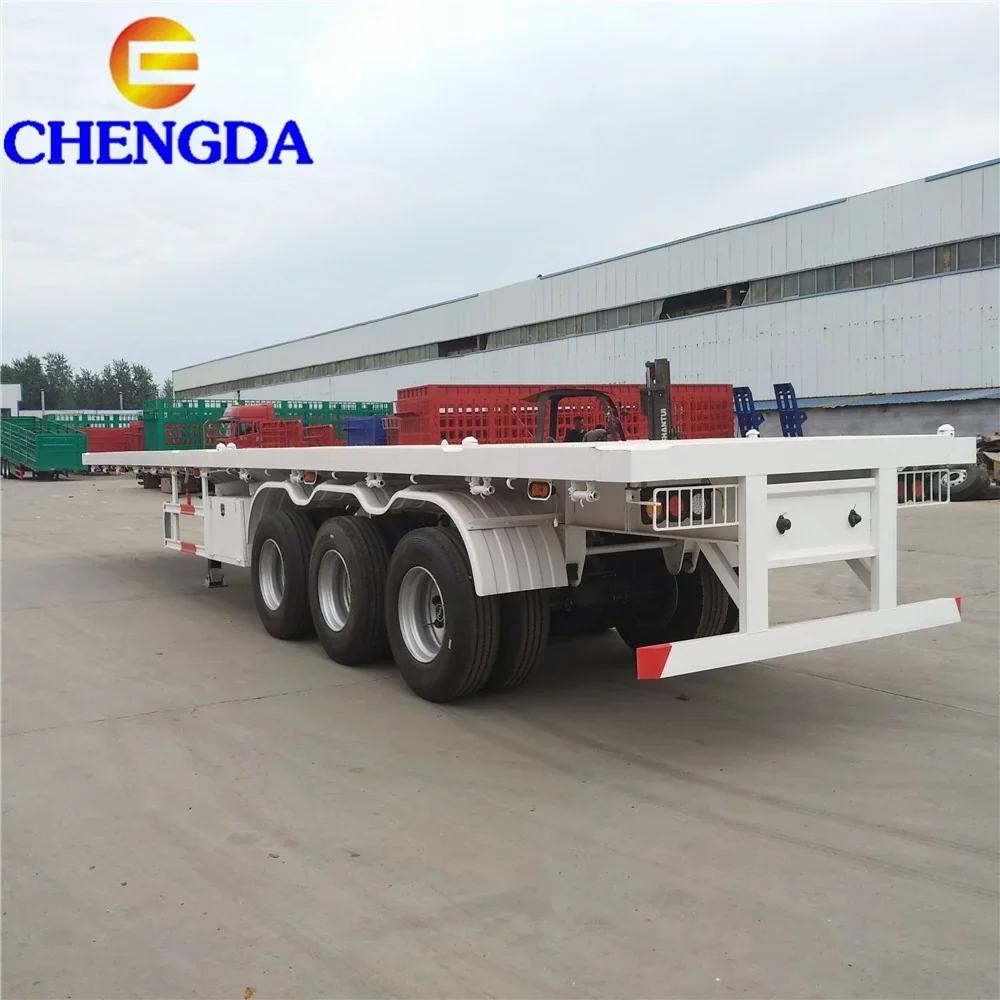
What Landing Gear Does — and the Load It Carries
Landing gear serves two functions. First, it supports the trailer's front end when the tractor is detached, allowing the combination to be parked, loaded, or unloaded without the tractor. Second, it raises or lowers the trailer to match the fifth wheel height of different tractors — the "cranking" operation that every driver performs at every uncoupling.
What is easy to underestimate is the load the legs carry. A typical 3-axle semi-trailer at maximum gross weight can place several tonnes on the landing gear when the trailer is loaded and detached. The landing gear on most standard trailers is rated for a static lifting capacity — the load it can lift when cranking — and a higher static support rating for simply holding the trailer in place once raised. Overload the legs, and the consequences range from bent legs and stripped gears to sudden structural collapse.
Understanding Lift Capacity Ratings
Landing gear is rated with two numbers that are frequently confused:
Static load capacity: The maximum weight the landing gear can safely support while the trailer is parked. This is always the higher of the two figures — typically 30,000 to 60,000+ pounds (about 13.6 to 27+ tonnes) depending on the model. The static rating applies when the legs are fully extended and stationary, holding the trailer in place.
Lifting capacity: The maximum weight the gear can actually lift while the driver is cranking — the dynamic force the legs can generate. This is lower, typically 15,000 to 25,000 pounds (about 6.8 to 11.3 tonnes). It matters because a driver who cranks the legs against a load beyond the lifting rating risks stripping the gears, bending the crank shaft, or damaging the leg assembly.
For fleet managers, the practical rule is: verify your trailer's landing gear rating, and if the trailer is regularly dropped and picked up under heavy load — for example, a loaded container chassis or a bulk cement tanker — specify landing gear with ratings that comfortably exceed the front-end weight of the loaded trailer. Undersized landing gear on a heavy-haul trailer is a failure waiting for an unlucky day.
Daily and Weekly Maintenance
Landing gear maintenance is simple but must be regular. A five-minute routine per trailer per week prevents most failures:
Lubrication
The screw shaft, gears, and leg slides need clean grease. When the legs are raised, wipe the screw and gears clean and apply fresh grease. Grease prevents the metal-to-metal wear that turns smooth cranking into grinding, and it keeps moisture out of the gearbox. Use a good quality general-purpose grease; do not use old engine oil as a substitute — it drains off the components and leaves them unprotected.
Visual Inspection
With the trailer parked and the legs extended, look for:
Bent or dented leg tubes — a leg that looks slightly out of line has been overloaded or struck by something
Worn or damaged feet/shoes — the ground pads at the bottom of the legs
Missing or broken mounting bolts where the gear attaches to the trailer frame
Cracks in the gearbox housing or around the weld points
Excessive rust, particularly at the leg slides
Crank Function Check
Raise and lower the legs through at least one full cycle. The crank should turn smoothly without grinding, catching, or unusual resistance. Stiffness in the crank is the first sign of dry gears or a bent shaft — address it before it becomes a stripped gear.
Monthly and Quarterly Checks
Once a month — or more often in dusty, sandy, or coastal environments — add these checks:
Gearbox oil level: Many landing gear models have a small oil fill on the gearbox. Check the level and top up with the specified oil. A gearbox running dry will strip its teeth in a matter of weeks.
Sandshoe condition: The feet wear on rough ground, and a worn shoe exposes the leg tube to direct contact with the ground, accelerating tube damage. Replace worn shoes before they wear through.
Mounting bolt torque: Vibration loosens the bolts holding the landing gear to the frame. A loose landing gear assembly transfers shock loads to the bolts and the frame mounting points, causing cracks over time. Re-torque to the manufacturer's specification.
In coastal or high-humidity regions, pay special attention to corrosion. The legs are exposed to road spray and salt-laden air, and corrosion can freeze the sliding sections or weaken the tubes structurally. A monthly wash-down of the leg assemblies, followed by re-greasing, extends life significantly in these environments.
Common Failure Modes — and How to Spot Them Early
Landing gear failures rarely happen without warning. The signs are there; they are just easy to miss.
| Warning Sign | Likely Cause | Action |
|---|---|---|
| Hard cranking, grinding noise | Dry gears, worn bearings, or bent crank shaft | Lubricate and inspect; if noise persists, open the gearbox for inspection |
| Leg drops suddenly when crank released | Worn internal brake/retaining mechanism or stripped teeth | Do not use; replace the gearbox or the full assembly |
| Leg will not fully retract | Bent leg tube or damaged slide section | Straightening is not reliable — replace the leg |
| Trailer sits visibly crooked on its gear | One leg bent or one leg collapsed | Check both legs; replace damaged side |
| Oil leaking from gearbox | Seal failure | Replace seals and refill; monitor for recurrence |
When to Replace — and What to Replace
Landing gear has a finite life. A reasonable expectation for a trailer in normal service is roughly 10 to 15 years, but heavy use, rough loading yards, and poor maintenance shorten this significantly. Replace the landing gear — or major components of it — when any of the following is true:
The leg tube is bent, dented, or cracked. Structural damage to the tube cannot be reliably repaired. Straightening a bent leg weakens the metal and it will bend again — worse, it may fail under load.
The gearbox has stripped gears or a broken shaft. When the crank no longer engages reliably, the gearbox internals are worn beyond economic repair. Replacement gearboxes are available for most standard landing gear models.
The mounting structure is damaged. Cracks in the trailer frame around the landing gear mounting points are a frame problem, not just a landing gear problem — have the frame inspected and repaired by a qualified workshop before refitting gear.
The legs are rusted through or frozen. Severe corrosion that has pitted the leg tubes or seized the slides means the unit is beyond maintenance.
Rated capacity no longer matches the operation. If your trailers now run heavier loads than when the gear was specified, upgrade to a higher-rated assembly rather than risk running at the edge of the rating.
When replacing, you have three options. A complete landing gear assembly (both legs, cross-shaft, and gearbox) is the simplest and most reliable choice — everything is new, matched, and correctly rated. Replacing only the gearbox or only one leg saves money but requires matching the new component to the existing model and condition. Upgrading to a higher-capacity assembly costs more but is justified when the trailer's duty cycle has changed. For most fleet operators, the complete assembly is the recommended option: the labor cost of swapping landing gear dominates the job, and replacing everything in one operation avoids a second swap a year later.
Specifying Landing Gear for New Trailers
When ordering a new semi-trailer — whether a flatbed, lowbed, fuel tanker, or container chassis — the landing gear is usually a standard-fit component, but it does not have to be. Ask your trailer supplier for the landing gear specification: brand, static capacity, lifting capacity, leg travel, and crank type (single-speed or two-speed). For trailers that will routinely be dropped loaded, specify gear with lifting capacity that covers the loaded front-end weight, and consider a two-speed crank gearbox — the low gear makes heavy cranking dramatically easier on drivers.
Conclusion
Landing gear is a small component with a critical job. Five minutes of weekly lubrication and a monthly inspection will prevent the vast majority of failures, and understanding the difference between static capacity and lifting capacity prevents the overloading that causes most structural damage. When replacement becomes necessary, replace with the correct rated assembly and take the opportunity to match the gear to the trailer's real operating load. It is a modest cost — and it is the difference between a trailer that uncouples and recouples smoothly for years and one that lets a loaded trailer down hard in a loading yard.
For landing gear specifications on new semi-trailer orders, or for advice on matching gear capacity to your trailer fleet, contact the Shandong Chengda Truck Trailer team.