How to Maintain Your Semi-Trailer's Braking System in Dusty Conditions
Introduction
Semi-trailers operating in dusty environments — unpaved haul roads, construction sites, mining zones, dry-season rural routes — face a constant challenge: fine particles infiltrating the braking system. Dust does not just make a trailer look dirty. It accelerates wear on brake linings, clogs air system components, and can compromise stopping performance when it matters most. For fleet operators in Africa, Latin America, and other regions where dusty conditions are the norm rather than the exception, a proactive maintenance routine is not optional — it is essential. This guide outlines practical steps to protect your trailer's braking system and keep your fleet safely on the road.
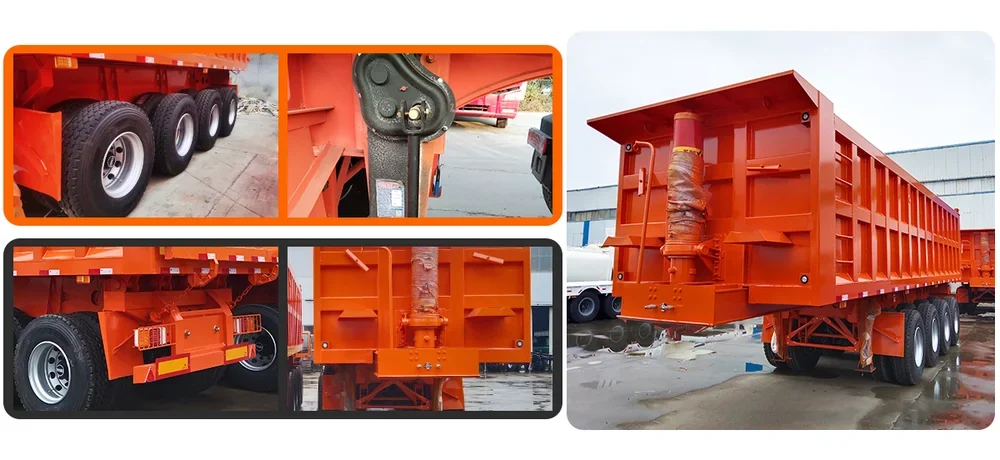
1. Why Dust Is a Braking System's Enemy
Before getting into maintenance procedures, it helps to understand what dust actually does to a braking system. The problem operates on three levels.
First, abrasive wear. Dust particles, particularly silica and mineral fines common on unpaved roads, act like sandpaper between the brake lining and the drum or disc. This accelerates lining wear and can score the friction surface, reducing braking efficiency and requiring more frequent parts replacement.
Second, air system contamination. Most semi-trailers use pneumatic (air) braking systems. Dust drawn into the air intake can clog filters, contaminate valves, and introduce abrasive particles into air lines and brake chambers. Over time, this leads to sluggish brake response, air leaks, and component failure.
Third, heat dissipation problems. A layer of caked dust and debris on brake components acts as an insulator, trapping heat that should be dissipating. Brakes that run hotter wear faster and are more susceptible to fade during prolonged use — a serious safety concern on long descents or in heavy traffic.
The good news is that all three of these problems are manageable with the right maintenance habits.
2. Daily Visual Inspections Should Be Non-Negotiable
A thorough walk-around inspection at the start of each operating day is the single most effective way to catch brake issues before they become breakdowns. In dusty conditions, this should include:
Brake Linings and Drums
Look for visible cracks, uneven wear patterns, and excessive dust accumulation caked onto the drum surface. If the lining thickness is approaching the manufacturer's minimum specification, schedule a replacement — do not wait until metal contacts metal.
Air Lines and Fittings
Check for loose connections, visible cracks in rubber hoses, and signs of abrasion where lines rub against the chassis. Dust acts as a cutting agent when trapped between vibrating components.
Air Tanks
Drain the air tanks daily. In dusty environments, moisture mixes with dust to form sludge at the bottom of the tank. If this sludge enters the air lines, it can block valves and damage brake chamber diaphragms. If you see milky or muddy water when draining, increase the draining frequency to multiple times per day.
Dust Shields and Boots
Inspect rubber boots on brake chamber pushrods and any dust shields around brake assemblies. Torn or missing boots are an open invitation for dust to enter.
Tip: Each driver or operator should have a printed checklist and be trained to recognize what normal versus concerning conditions look like.
3. Air Filter Maintenance — The First Line of Defense
The air compressor that supplies your trailer's braking system draws in ambient air. In dusty conditions, the compressor's intake filter works harder than the manufacturer's standard service interval assumes.
Shorten filter replacement intervals. If the standard recommendation is every 3 months or 25,000 kilometers, consider cutting that by a third to a half in persistently dusty environments. A clogged or damaged filter allows unfiltered air into the system, where it damages everything downstream.
Inspect the filter housing. Dust can enter through cracks in the housing or poorly seated filter elements, bypassing the filter entirely. After every filter change, verify that the housing seals correctly.
Consider upgrading to a heavy-duty or multi-stage filter if your trailers are operating in extreme dust conditions such as mining sites or desert routes. The small additional cost of a better filter is far outweighed by the savings from avoided brake system repairs.
4. Brake Lining and Drum Inspection
Brake lining wear in dusty conditions is rarely uniform. Abrasive particles tend to concentrate in certain areas, creating uneven wear that reduces the effective contact area between the lining and the drum.
Measure lining thickness at multiple points across each brake shoe, not just at the center. A lining that appears acceptable at one measurement point may be dangerously thin at another.
Check drum surfaces for scoring and heat cracking. Deep grooves caused by embedded dust particles reduce friction and increase stopping distance. If scoring exceeds the manufacturer's tolerance, the drum needs resurfacing or replacement.
Pay extra attention to the trailer's rear axles. On multi-axle semi-trailers, rear axles often sit closer to the dust cloud kicked up by the front axles and the tractor unit, making them more susceptible to contamination.
Keep a maintenance log for each trailer that records lining thickness measurements at every inspection. This allows you to track wear rates and predict when replacements will be needed — order parts in advance rather than reacting to a failure.
5. Clean Brake Components — But Do It Correctly
It is tempting to blast dust off brake components with compressed air during routine servicing. Do not do this. Compressed air blows fine dust particles into the air where they can be inhaled — and many brake linings historically contained materials that are hazardous when airborne. Even with modern asbestos-free linings, the dust cloud is a respiratory risk.
The correct approach:
Use a HEPA-filtered vacuum system designed for brake dust collection.
If vacuum equipment is not available, use damp cloths to wipe down accessible surfaces, and wear appropriate respiratory protection.
Clean around the brake area before disassembly, not after, to prevent contaminants from entering exposed components.
After cleaning, apply a light coat of appropriate grease to slack adjusters and camshaft bushings — these are friction points that dust can rapidly degrade if left dry.
6. Protect Air Lines and Electrical Connections
Modern semi-trailers increasingly use electronic braking systems (EBS) alongside traditional pneumatics. Dust can interfere with both.
Route air lines and wiring harnesses away from wheel spray zones wherever possible. Use protective spiral wrap on exposed wiring.
Check all electrical connectors for dust ingress. A fine layer of dust inside a connector can cause intermittent signals to the EBS control unit, triggering fault codes that are difficult to diagnose.
Inspect ABS sensor rings and sensors regularly. Dust mixed with grease from wheel bearings forms a paste that can block the sensor's magnetic pickup, disabling the ABS on that wheel. A blocked ABS sensor may not trigger a dashboard warning until the problem is severe.
7. Stock Spare Parts for Brake System Wear Items
In remote locations — which is where dusty conditions are most common — waiting weeks for a replacement brake chamber or set of linings to arrive is not an option. A basic brake system spare parts inventory for a fleet operating in dusty conditions should include:
Brake linings (at least one full axle set per trailer type)
Brake chamber diaphragms and return springs
Slack adjusters
Air line fittings, connectors, and a coil of spare tubing
Compressor intake filter elements
ABS sensor units
The cost of holding these parts is modest compared to the cost of a trailer sitting idle waiting for a shipment.
Conclusion
Dust is an unavoidable part of the operating environment for many semi-trailer fleets, particularly in Africa and Latin America's construction, mining, and agricultural transport sectors. It cannot be eliminated — but its impact on braking system performance and service life can be managed through consistent inspection routines, shortened service intervals, and a well-stocked spare parts inventory.
The fleets that stay on the road longest in dusty conditions are not the ones with the newest equipment. They are the ones with the best maintenance discipline.

For more information on semi-trailer specifications, maintenance, or to inquire about our range of flatbed, lowbed, dump, tanker, and cargo trailers designed for heavy-duty operating environments, contact our team at Shandong Chengda Truck Trailer Co., Ltd.