1. Total Cost of Ownership, Not Just Purchase Price
A common perception among some African buyers — particularly those who operated European fleets in earlier decades — has been that Chinese trucks are "cheaper but less durable." While this view reflected certain market realities in the 2000s, when unregulated small traders exported low-spec units with little after-sales support, the landscape has evolved significantly.
Over the past 10 to 15 years, leading Chinese heavy-vehicle manufacturers have invested substantially in product development and quality control. Many models now feature key components from globally recognized suppliers. Sinotruk, for example, has long-standing technology partnerships with MAN; Shacman and Foton utilize powertrain components from Cummins, Weichai, and Fast Gear. These are not unbranded budget parts — they are engineered systems with established service networks.
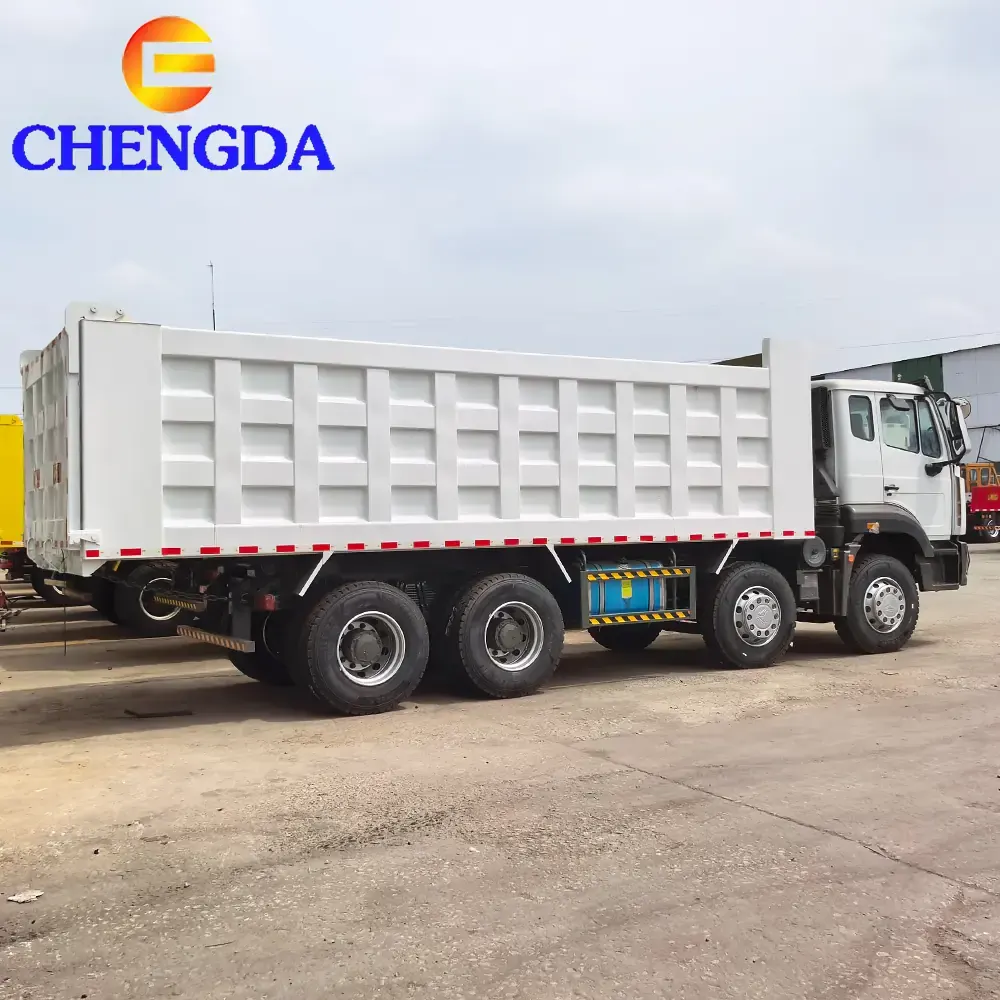
The resulting competitive advantage is best understood through total cost of ownership (TCO), which accounts for the purchase price, fuel consumption, maintenance frequency, parts availability, and expected service life as a combined picture. On TCO, well-configured Chinese heavy-duty trucks now deliver a value proposition that makes them difficult to ignore — particularly for fleet operators who prioritize capital efficiency and short-to-medium payback periods. The initial purchase price advantage over European equivalents is significant, and when paired with improving component quality, the long-term economics become compelling.
2. Parts Availability and Service Network Density
One of the most operationally painful scenarios for any fleet manager is a vehicle sitting idle for weeks while awaiting a spare part shipped from Europe. For years, this was a genuine weakness of the European truck ecosystem in Africa: parts networks were sparse outside major cities, and specialized components often required air freight from the manufacturer's home country.
Chinese manufacturers, led by Sinotruk and Shacman, have addressed this bottleneck by establishing regional parts distribution centers in key African markets including Kenya, Tanzania, Nigeria, and Ghana. Through partnerships with local distributors, common wear components — brake linings, oil filters, clutch assemblies, leaf springs — are increasingly stocked in-country. While no brand can guarantee zero downtime, the reduction in parts lead time is a measurable improvement that fleet operators factor directly into their procurement decisions.
This is not to suggest that European or Japanese brands lack parts infrastructure in Africa. Rather, the observation is that Chinese OEMs have deliberately invested in closing the gap, and in several markets, their after-sales density now matches or exceeds that of legacy competitors.
3. Engineering for Operating Conditions
The operating environment in much of Africa — unpaved or partially paved roads, high ambient temperatures, variable fuel quality, and heavy dust loads — imposes demands that differ from the conditions for which most European trucks are optimized. European designs prioritize highway fuel efficiency, emissions compliance, and driver comfort on smooth surfaces. These are commendable engineering goals, but they do not always align with the priorities of a fleet operating on laterite haul roads in equatorial conditions.
Chinese heavy-truck platforms, shaped by decades of domestic deployment across similarly challenging terrain — from high-altitude plateaus to desert mining zones — tend to incorporate design features suited to these realities. Reinforced chassis rails, simplified electronic architectures with fewer delicate sensors, heavy-duty cooling systems, and high-ground-clearance configurations are common baseline specifications rather than expensive optional upgrades. For fleet operators who value reliability under stress over advanced telemetry, this design philosophy is an asset.
4. The Professionalization of Chinese Export Channels
A decade or more ago, buying a Chinese truck from overseas often meant dealing with a small trading intermediary: no factory connection, inconsistent quality inspection, and limited post-delivery recourse. This era left a mark on market perception, and the sector has worked to move past it.
Today, professional export enterprises — particularly those structured as manufacturers or authorized export partners with direct factory relationships — operate on a fundamentally different model. Companies like Shandong Chengda Group, established in 2005 and certified as a National High-Tech Enterprise, maintain direct procurement relationships with major Chinese OEMs including Sinotruk, Shacman, FAW, Foton, and XCMG. They conduct independent pre-delivery quality inspections, supply complete export documentation packages, and encourage prospective buyers to visit the production facilities before committing to an order.
For the African buyer, this means the difference between buying through a trading company with no factory accountability and sourcing through an exporter whose business depends on repeat orders and verifiable delivery records. The distinction matters because fleet procurement decisions carry multi-year financial implications.
5. Consolidated Supply Chains: Trucks, Trailers, and Machinery in One Shipment
A recurring logistical challenge for African fleet operators is that a single project often requires a mix of vehicle types that historically had to be sourced from multiple suppliers. A mining operation may need articulated dump trucks for haulage, a lowbed semi-trailer for moving excavators, a fuel tanker for on-site refueling, and a water bowser for dust suppression. Procuring these from separate manufacturers across different countries introduces complexity: multiple shipping schedules, incompatible documentation, and fragmented after-sales support.
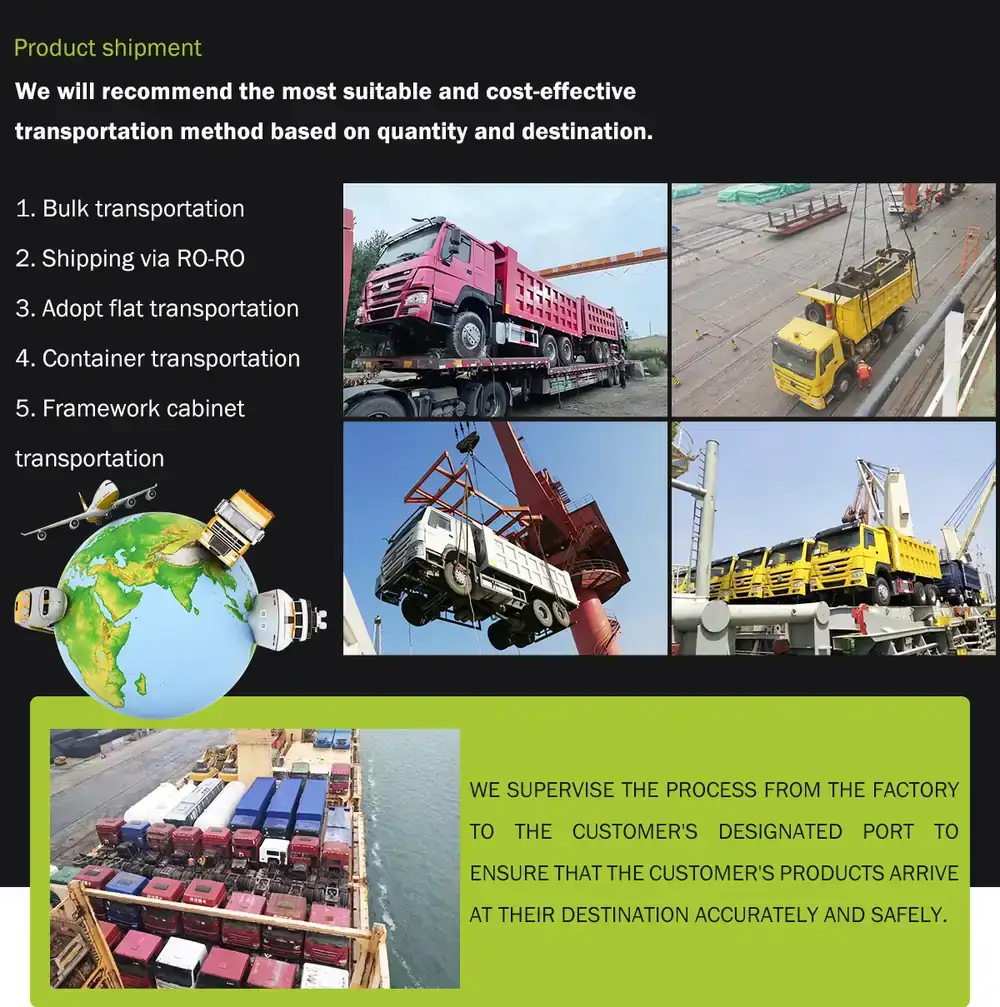
A consolidated export model addresses this inefficiency. When a single supplier can provide the full equipment package — dump trucks, semi-trailers, fuel tankers, water bowsers, excavators, and spare parts — dispatched in a coordinated shipment with unified documentation, the logistical and administrative burden on the buyer is significantly reduced. This model also simplifies after-sales coordination, as the buyer maintains a single point of contact for parts and technical inquiries.
A Measured Conclusion
The growth of Chinese heavy-duty vehicle brands in African markets is not a sudden disruption but a gradual, structurally driven shift. It reflects improvements in product quality, targeted investment in parts infrastructure, design philosophies aligned with local operating conditions, and the maturation of professional export channels. Each fleet owner's situation is different — factors such as financing arrangements, existing fleet composition, and specific operational requirements all play a role in procurement decisions — and no single brand or country of origin is categorically superior.
What can be said with confidence is that Chinese heavy-duty vehicles have earned their place in the African fleet landscape on competitive merit, and the trend lines suggest their presence will continue to expand.