Shacman X3000 vs X5000 vs F3000: Which 6×4 Tractor for Which Job?
Three Shacman 6×4 tractors, one badge, three jobs. Buyers keep asking whether the newer X5000 is simply the better truck. Sometimes it is — but on a mine haul road it is the wrong tool, and the older F3000 is the right one.

The three trucks, one line each
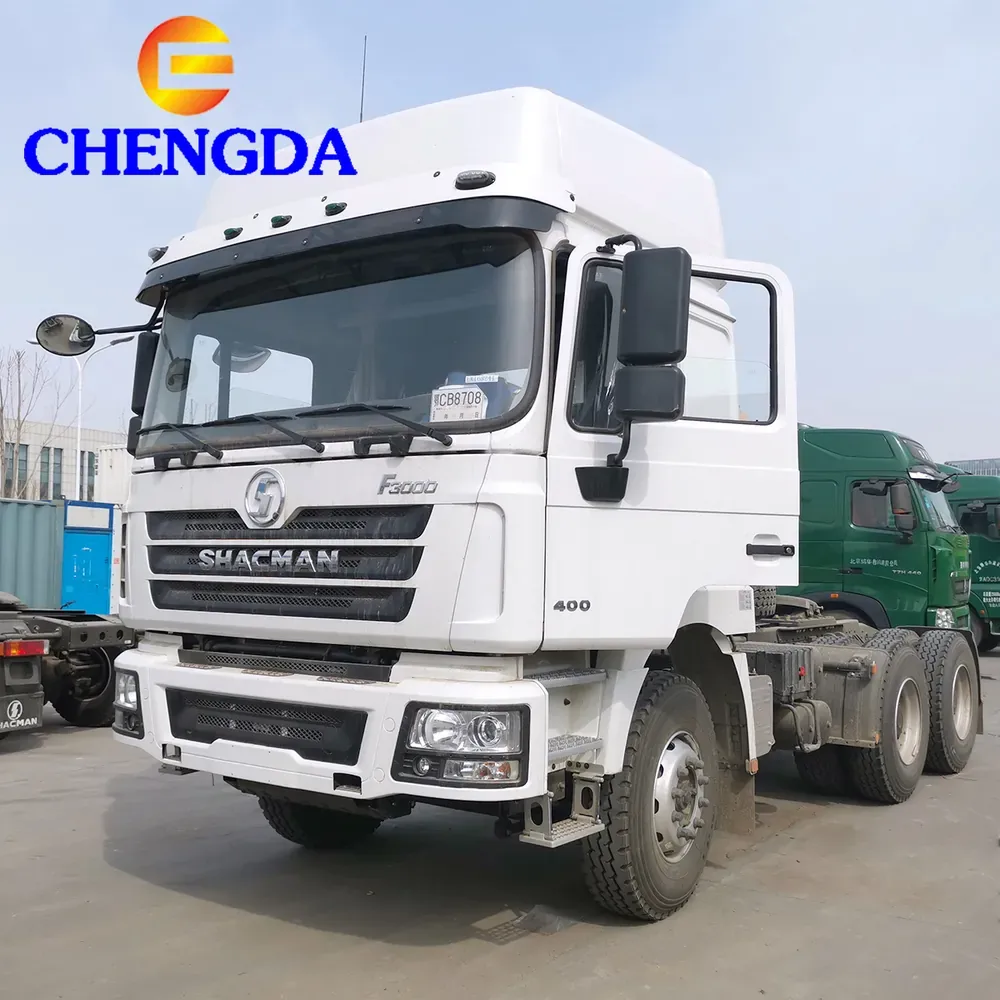
F3000 — the workhorse. Weichai WP10/WP12, 340–430 hp, FAST 12-speed manual, 13T/16T double-reduction (hub) axles with differential locks, GCW 40–60 t. Built for rough roads, and for repair in the field.
X3000 — the all-rounder. MAN-technology diesel, FAST manual with inter-axle diff locks, double-frame chassis, aerodynamic cab with air-suspension seats and twin berths.
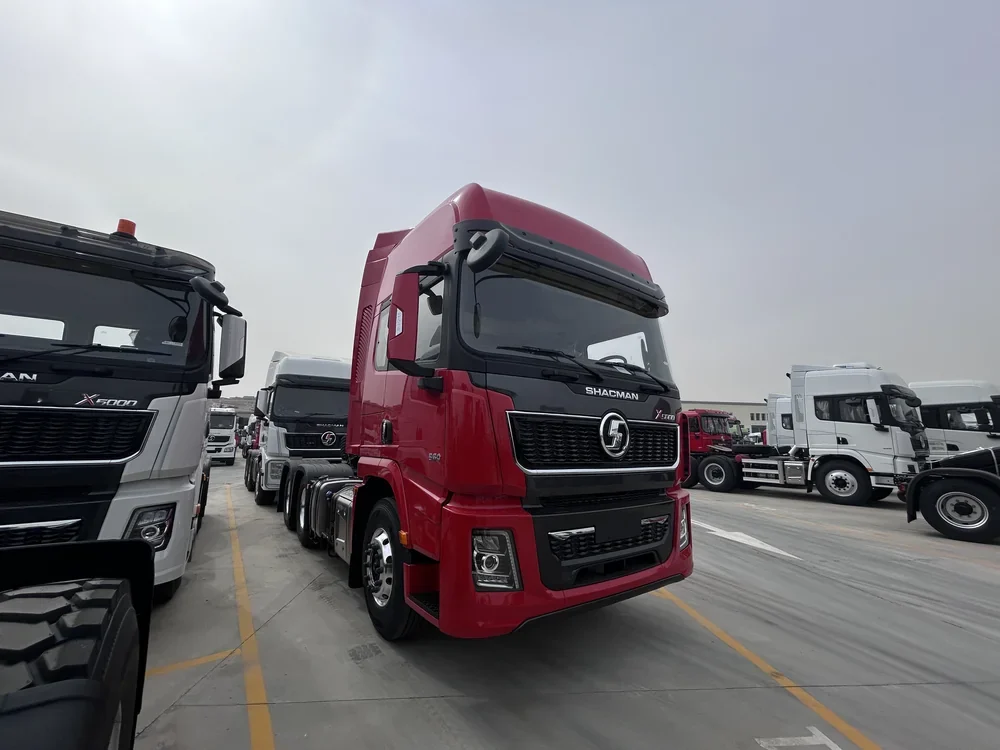
X5000 — the long-haul premium. Weichai WP12/WP13, 430–550 hp, manual or AMT, 7.5T front and 13T rear axles, JOST 50#/90#, 700 + 300 L fuel, Euro II–VI, noise-insulated cab.
| F3000 | X3000 | X5000 | |
|---|---|---|---|
| Designed for | Mine and site haulage | Mixed regional freight | Long-haul highway |
| Engine | Weichai WP10/WP12, 340–430 hp | MAN-technology diesel | Weichai WP12/WP13, 430–550 hp |
| Gearbox | FAST 12-speed manual | FAST manual, inter-axle diff locks | Manual or AMT, 12F + 2R |
| Rear axle | 13T/16T double reduction, diff locks | Heavy-duty reduction axles | 13T single or double reduction |
| GCW | 40,000–60,000 kg | — | — |
| Fuel | 400 / 600 L | — | 700 + 300 L |
What “double reduction” actually buys you
A hub-reduction axle splits the final drive into two stages — one at the differential, one inside each wheel hub. Torque is multiplied at the wheel, so half-shafts and differential carry less stress for the same pull, and the diff housing sits higher off the ground. The cost: an extra gear set and oil in each hub, plus three to four litres per 100 km more at highway speed.
The rule is simple. Steep grades, soft ground and overloaded running want double reduction. A flat paved corridor at legal weights wants single reduction. That is the F3000 versus X5000 question in one sentence.
Four questions that pick the truck for you
1. How heavy, and how steep? Above 50 t, or grades that make loaded trucks crawl, the F3000’s hub reduction is doing real work. Staying at 40–45 t on flat corridors means paying for capability you never use.
2. What is under the wheels? Laterite, gravel and mine haul roads eliminate the X5000 immediately — wrong axle, wrong ground clearance. It is the question buyers ask last and should ask first.
3. How far per trip, and where do you refuel? The X5000 carries 1,000 L, roughly 2,800 km loaded. A 400 L F3000 tank is fine for site shuttles and awkward on a 1,200 km cross-border run.
4. Who drives it, and will they stay? On a long route, twin bunks and an air-ride seat are staff retention, not comfort. On a 15 km mine shuttle, nobody cares.
Cost per kilometre
Assume 120,000 km a year, diesel at US$1.10 per litre, loaded 6×4 at 30 t payload:
F3000 at 38 L/100 km → ≈ US$50,200 a year in fuel
X3000 at 35 L/100 km → ≈ US$46,200
X5000 at 32 L/100 km → ≈ US$42,200
On a paved corridor the X5000 saves about US$8,000 a year over the F3000 — which is how the premium version pays for itself. Move all three to a 15 km mine haul at 20 km/h with long idling, and consumption converges within about 5%: nobody is cruising at 85 km/h. What separates them there is a broken axle, a cracked frame, and four days waiting for a part.
These are planning figures, not measured results. Put your own kilometres, diesel price and cycle times in before you read a quotation.Matching truck to job
Port container shuttle, 40–120 km, paved → X3000. Cheapest of the three that does it comfortably.
Cross-border 800–1,500 km, van or reefer → X5000. AMT, range and cab earn their price.
Mine haulage, lowbed, 60 t, laterite → F3000. Not because it is cheaper, but because it was designed around that duty.
Fuel tanker or bulk cement → X3000 by default; F3000 if the last 20 km are unpaved with a full tank.
Start-up fleet, mixed work → F3000 first, add X3000 when the first paved long-haul contract lands.
Five mistakes buyers make
Buying X5000 for a mine because it is newer — AMT, single reduction and lower clearance on laterite.
Buying F3000 for a 1,200 km highway route — three to four litres per 100 km, every day, forever.
Ignoring the axle ratio — same model, different ratio, different job. Specify it.
Getting the fifth wheel wrong — 50# (2″) and 90# (3.5″) are not interchangeable. Measure your trailers first.
Matching emission standard to the brochure instead of the fuel — a Euro V engine on 500 ppm diesel lives in derate and workshop visits.
Before you sign
Confirm the GCW against your actual loaded combination; the axle ratio and differential locks in writing; the fifth wheel size; the fuel tank size; the emission standard against the sulphur in the diesel you can actually buy; and parts commonality with the fleet you already run. Three models sharing one parts bin is worth more than one model that is 5% better on paper.
The short answer
Broken ground: F3000. Mixed regional and paved: X3000. Long paved cross-border at legal weights: X5000 — and let the fuel bill pay for the cab.
Still unsure? Send us your route, your load and your annual distance. We will quote the three side by side, with axle ratio and emission standard matched to your market, and tell you honestly which one we would put on that route. Factory-direct from Shandong, shipped to your port in 15–30 days.